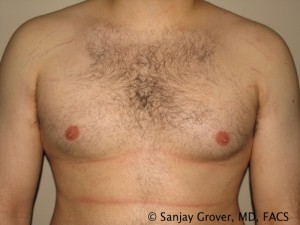
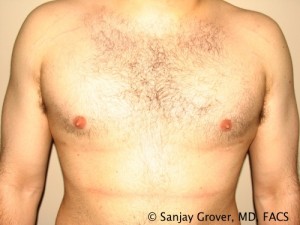
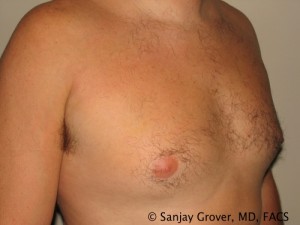
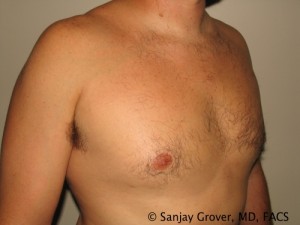
Our Orange County gynecomastia surgery is a procedure designed to reduce the size of overdeveloped breasts in men. This condition is known as Gynecomastia and is more common than you might think. Many men suffer from this condition and while it poses no real health risks, it often causes low self-esteem and self-consciousness in the men afflicted with it. Even after consistent working out and eating healthier, the problem still will exist for some men. For men who wish to seek a fix for their gynecomastia condition, male breast reduction surgery is an option. Dr. Grover, a Newport Beach plastic surgeon serving patients in Los Angeles and Orange County, specializes in the gynecomastia procedure.
Good candidates for Orange County male breast reduction are in good physical and mental health with realistic expectations for the procedure and its potential outcome. While a male breast reduction can be performed at any age, it is recommended that the patients bodies are fully developed first. Some men may be able to benefit solely from liposuction of the chest without cutting out excess glandular tissue, fat or skin, while others may need a full breast reduction procedure to get the desired result.
Male breast enlargement, or feminized breasts may occur in babies, teenagers, and senior men. Gynecomastia can be quite distressing to a young teenager or adult even though it is a benign condition. The incidence of gynecomastia is approximately 60-65% in young men during puberty. Eighty to ninety percent of males with gynecomastia will have their problem resolve by the end of puberty; however, the remaining ten to twenty percent will have persistent issues with breast enlargement and may desire treatment.
Gynecomastia is also referred to as ‘man boobs’ or ‘puffy nipples’. It may be caused by excess estrogen or decreased testosterone. It may be due to enlarged glandular breast tissue under the areola or due to the accumulation of excess fatty or adipose tissue under the areola (pseudogynecomastia).
Glandular gynecomastia limited just under the areola is common in male bodybuilders who may use anabolic steroids. The excess testosterone is converted to estrogen that then leads to increased growth of glandular tissue. Gynecomastia may sometimes be due to medications. Some offending medications known to cause this include spironolactone, hcg, cimetidine, dilantin and valium. Other known causes include alcohol, marijuana, heroin and amphetamines. Although gynecomastia occurs on both sides usually (bilaterally), there are cases where an individual suffers from one-sided (unilateral) gynecomastia.
Although the incidence of male breast cancer is low, someone suffering from unilateral gynecomastia should have this taken into consideration, especially in the presence of a family history of breast cancer. In cases of persistent male breast enlargement, unless it is due to excess fatty/adipose tissue, it will not resolve on its own. Patients with excess fatty tissue or pseudogynecomastia may see improvement with weight loss. Newport Beach gynecomastia patients who seek surgical treatment of male breast enlargement by a plastic surgeon may be offered one of several options.
Liposuction alone is a good surgical option for those patients who have pseudogynecomastia or excess fatty tissue without excess glandular tissue. Dr. Grover prefers power-assisted liposuction for these patients as he finds it to be one of the most effective ways to remove more fibrous adipose tissue in men. Some patients with a combination of excess glandular tissue and adipose tissue may benefit from a combination of power-assisted liposuction for the fatty tissue along with an endoscopic cartilage shaver for the excess glandular tissue. This combination of liposuction and suction-assisted cartilage shaver can allow for complete treatment of the male breast enlargement with the use of a small access incision on the chest, avoiding any larger scars on the chest. Patients with isolated glandular tissue directly under the areola may benefit from straight excision with the use of a small incision along the border of the lower portion of the areola. Although these procedures could be performed under local anesthesia alone, most patients prefer to have the procedure performed under intravenous sedation or general anesthesia with the assistance of an anesthesiologist.
An Orange County gynecomastia surgery may take 1-2 hours. Bruising and discomfort are minimal and drains are rarely utilized. Patients go home the same day as the procedure is an outpatient procedure. They leave with some foam padding on their chest with an overlying compression vest. Patients are seen the following morning for a quick post op visit and maintain the compression vest for 3-4 weeks post operatively. Driving may resumed in several days as long as there is no narcotics being taken for discomfort. Light exercise may resume in 3-5 days although bench pressing or push ups are discouraged for 4-6 weeks.
The most important step in your male breast reduction journey is finding the right plastic surgeon for you. Dr. Grover is a Stanford-trained, board-certified plastic surgeon located in Newport Beach, CA.
For information about female breast reduction, please visit our breast reduction page.
For more information about male breast reduction, please visit www.gynecomastia.com.
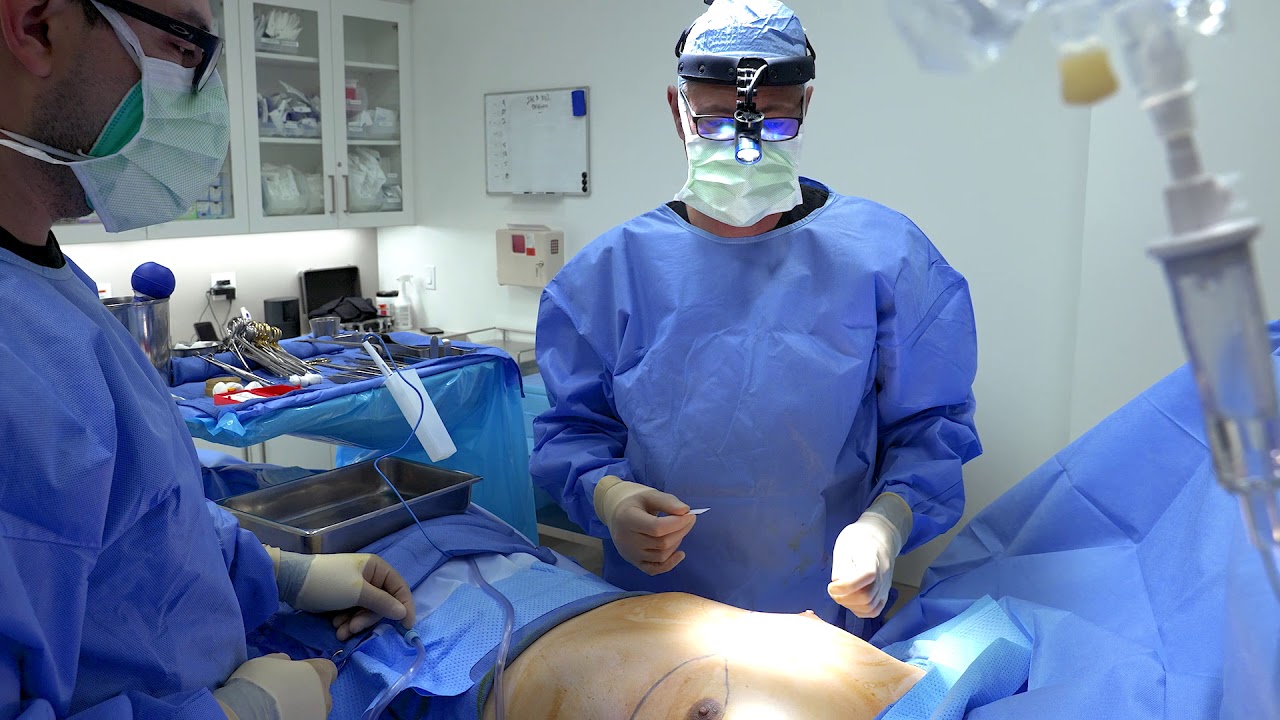
The cost varies, as some patients may require only liposuction, while others require the surgical excision of excess male breast tissue.
Gynecomastia surgery is not covered by insurance, as it is considered to be elective cosmetic surgery. Dr. Grover offers financing options for men who want this surgery.
In cases where patients have used anabolic steroids after surgery or gained an excessive amount of weight, there have been instances of the re-development of breast tissue or fatty deposits.
Maintain a healthy diet and lifestyle will help you maintain the firm, flat, masculine look of your chest area.
Yes, if you feel that your nipples are too large or protruding, they can be reduced in size during your surgery. If the breast reduction was significant, the nipple may need to be relocated to a higher, more natural position on the chest.
Yes, it is common for liposuction to be performed on other areas of the body, such as on the abdomen or to remove back fat.
© Grover Aesthetics. All Rights Reserved. Privacy Policy | HIPAA Privacy Policy Digital Marketing & Design by Studio 3 Marketing®
Accessibility: If you are vision-impaired or have some other impairment covered by the Americans with Disabilities Act or a similar law, and you wish to discuss potential accommodations related to using this website, please contact our Accessibility Manager at (949) 759 - 9551.
Get Started Send Us A Message